Buy software24.eu ?
We are moving the project
software24.eu .
Are you interested in purchasing the domain
software24.eu ?
domain@kv-gmbh.de · 0541-91531010
Buy software24.eu ?
What helps against intervertebral disc degeneration?
Intervertebral disc degeneration can be helped by maintaining a healthy weight, regular exercise to strengthen the muscles supporting the spine, and practicing good posture. Additionally, avoiding smoking and maintaining a balanced diet can also help prevent or slow down the degeneration of intervertebral discs. In some cases, physical therapy and specific exercises may be recommended by a healthcare professional to help manage the condition. **
What is rehabilitation sports for intervertebral discs?
Rehabilitation sports for intervertebral discs are exercises and activities designed to help strengthen the muscles supporting the spine, improve flexibility, and reduce pain associated with disc-related issues. These exercises focus on improving posture, core stability, and overall spinal health. By participating in rehabilitation sports, individuals can enhance their physical condition, prevent further injury, and promote the healing process of intervertebral discs. **


Similar search terms for Intervertebral
Top-Angebote
Products related to Intervertebral:
-
Inspire Essentials Pet Glucose Monitoring Kit For Dogs And Cats With Easy No Coding Testing bTake a more active role in your pet's health with this pet glucose monitor designed for convenient at home blood sugar testing. Created specifically for dogs and cats, this easy to use monitoring kit helps pet owners track glucose levels quickly and...89,98 $*Shipping: 0,00 $Secure redirect to the provider
-
Learning Resources Switcheroo Coding CrewJoin the Switcheroo Coding Crew for challenge-solving, obstacle-evading, screen-free rescue missions! Preschoolers save the day the coding way with this three-in-one rescue robot who's ready for early STEM fun! Snap on a vehicle shell to transform...59,99 $*Shipping: 0,00 $Secure redirect to the provider
-
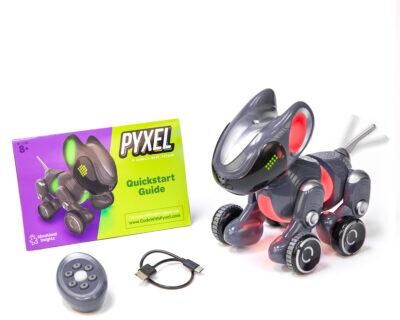
Learning Resources Pyxel The Coding PetKids use a computer or tablet to program this four-legged friend, then send their commands to the included remote to make the pet move, “talk”, and change facial expressions. Includes Coding Pet, user interface, and remote-activator unit. Pyxel The...124,99 $*Shipping: 0,00 $Secure redirect to the provider
-
Inspire Curations 220V 30A Digital Timer Switch With 7 Day Weekly Programming 220V 30A Digital Timer Switch With 7 Day Weekly ProgrammingAutomate everyday electrical tasks and spend less time switching equipment on and off manually. This digital timer switch provides programmable scheduling across a full 7day, 168hour cycle for convenient recurring automation. The weekly programmable...125,50 $*Shipping: 0,00 $Secure redirect to the provider



-
What is rehabilitation exercise for intervertebral discs?
Rehabilitation exercise for intervertebral discs is a targeted program designed to strengthen the muscles surrounding the spine, improve flexibility, and promote proper alignment of the spine. These exercises aim to reduce pressure on the intervertebral discs, promote healing, and prevent further injury. Common exercises include stretching, core strengthening, and low-impact aerobic activities. The goal of rehabilitation exercise for intervertebral discs is to improve overall spinal health and function, reduce pain, and prevent future disc-related issues. **
-
Does one become taller through intervertebral disc prostheses?
Intervertebral disc prostheses are designed to replace damaged or degenerated discs in the spine, providing support and stability to the affected area. While these prostheses can help alleviate pain and improve mobility, they do not directly contribute to an increase in height. The height of an individual is primarily determined by the length of their long bones, such as the femur and tibia, and the curvature of the spine. Intervertebral disc prostheses do not impact the length of these bones or the overall curvature of the spine, so they do not lead to an increase in height. **
-
Why does the intervertebral disc hurt since deadlifting?
The intervertebral disc can hurt after deadlifting due to excessive compression and shear forces placed on the spine during the lift. Deadlifting involves heavy lifting and can put a significant amount of pressure on the intervertebral discs, especially if proper form is not maintained. This can lead to disc herniation or bulging, causing pain and discomfort. Additionally, if the lifter has weak core muscles or poor lifting technique, it can further exacerbate the stress on the discs, leading to pain and potential injury. **
-
What is wrong with the intervertebral disc 3?
Intervertebral disc 3 may be affected by a variety of conditions, such as degeneration, herniation, or bulging. These conditions can cause symptoms such as back pain, numbness, tingling, or weakness in the arms or legs. The specific issue with intervertebral disc 3 would need to be diagnosed by a medical professional through imaging studies and a physical examination. Treatment options may include physical therapy, medication, or in some cases, surgery. **


How to recognize intervertebral discs on MRI images?
Intervertebral discs can be recognized on MRI images by their characteristic appearance as oval or round structures located between adjacent vertebrae. They typically have a dark signal intensity on T2-weighted images and a lighter signal intensity on T1-weighted images. The discs are surrounded by a thin layer of bright signal intensity called the annulus fibrosus, which helps to distinguish them from surrounding structures. Additionally, the presence of a central nucleus pulposus, which has a slightly higher signal intensity than the annulus fibrosus, can also help in identifying intervertebral discs on MRI images. **
How can intervertebral discs be recognized on MRI images?
Intervertebral discs can be recognized on MRI images as they appear as dark, oval-shaped structures between the vertebrae. They have a distinct appearance due to their composition of water and collagen, which gives them a different signal intensity compared to the surrounding tissues. Additionally, intervertebral discs are typically seen on T2-weighted images as they have a high water content, making them appear brighter than on T1-weighted images. Radiologists can also identify intervertebral discs based on their location within the spinal column and their characteristic shape and size. **
Top-Angebote
Products related to Intervertebral:
-
Arcturus Editions Computer Science for Curious Kids: An Illustrated Introduction to Software Programming, Artificial Intelligence, Cyber-Security-And More!Give young readers the gift of knowledge, with this beautifully illustrated, inspirational, and accessible book. Discover how scientific ideas can be harnessed to create computer programs that make our lives easier, help us to work more efficiently, and fill our leisure time with fun. Explore key ideas in computer science such as algorithms, graphics, networking, and intelligent systems. See how software has developed from its earliest days, and what computer scientists of the future may achieve. In this series, big new concepts pop off the page, thanks to vibrant diagrams and an engaging, energetic prose style. Kids will relish sharing them with friends and family! Discover a new way of looking at the world with this wide-ranging celebration of the subject of computer science. A great gift for readers aged 8-12.8,99 £*Shipping: 2,99 £Secure redirect to the provider
-
Inspired Deals Jaguar Land Rover USB Diagnostic Cable For OBD Programming Key Coding & Fault Scanner For Jaguar Land RoverTake control of your vehicle diagnostics with this powerful Jaguar Land Rover diagnostic cable designed for precision and ease. Built for mechanics, car enthusiasts, and DIY users, it lets you quickly identify faults, program systems, and match keys...79,97 $*Shipping: 0,00 $Secure redirect to the provider
-
Inspire Essentials Pet Glucose Monitoring Kit For Dogs And Cats With Easy No Coding Testing bTake a more active role in your pet's health with this pet glucose monitor designed for convenient at home blood sugar testing. Created specifically for dogs and cats, this easy to use monitoring kit helps pet owners track glucose levels quickly and...89,98 $*Shipping: 0,00 $Secure redirect to the provider
-
Learning Resources Switcheroo Coding CrewJoin the Switcheroo Coding Crew for challenge-solving, obstacle-evading, screen-free rescue missions! Preschoolers save the day the coding way with this three-in-one rescue robot who's ready for early STEM fun! Snap on a vehicle shell to transform...59,99 $*Shipping: 0,00 $Secure redirect to the provider
-
What helps against intervertebral disc degeneration?
Intervertebral disc degeneration can be helped by maintaining a healthy weight, regular exercise to strengthen the muscles supporting the spine, and practicing good posture. Additionally, avoiding smoking and maintaining a balanced diet can also help prevent or slow down the degeneration of intervertebral discs. In some cases, physical therapy and specific exercises may be recommended by a healthcare professional to help manage the condition. **
-
What is rehabilitation sports for intervertebral discs?
Rehabilitation sports for intervertebral discs are exercises and activities designed to help strengthen the muscles supporting the spine, improve flexibility, and reduce pain associated with disc-related issues. These exercises focus on improving posture, core stability, and overall spinal health. By participating in rehabilitation sports, individuals can enhance their physical condition, prevent further injury, and promote the healing process of intervertebral discs. **
-
What is rehabilitation exercise for intervertebral discs?
Rehabilitation exercise for intervertebral discs is a targeted program designed to strengthen the muscles surrounding the spine, improve flexibility, and promote proper alignment of the spine. These exercises aim to reduce pressure on the intervertebral discs, promote healing, and prevent further injury. Common exercises include stretching, core strengthening, and low-impact aerobic activities. The goal of rehabilitation exercise for intervertebral discs is to improve overall spinal health and function, reduce pain, and prevent future disc-related issues. **
-
Does one become taller through intervertebral disc prostheses?
Intervertebral disc prostheses are designed to replace damaged or degenerated discs in the spine, providing support and stability to the affected area. While these prostheses can help alleviate pain and improve mobility, they do not directly contribute to an increase in height. The height of an individual is primarily determined by the length of their long bones, such as the femur and tibia, and the curvature of the spine. Intervertebral disc prostheses do not impact the length of these bones or the overall curvature of the spine, so they do not lead to an increase in height. **
Similar search terms for Intervertebral
-
Learning Resources Pyxel The Coding PetKids use a computer or tablet to program this four-legged friend, then send their commands to the included remote to make the pet move, “talk”, and change facial expressions. Includes Coding Pet, user interface, and remote-activator unit. Pyxel The...124,99 $*Shipping: 0,00 $Secure redirect to the provider
-
Inspire Curations 220V 30A Digital Timer Switch With 7 Day Weekly Programming 220V 30A Digital Timer Switch With 7 Day Weekly ProgrammingAutomate everyday electrical tasks and spend less time switching equipment on and off manually. This digital timer switch provides programmable scheduling across a full 7day, 168hour cycle for convenient recurring automation. The weekly programmable...125,50 $*Shipping: 0,00 $Secure redirect to the provider
-
Team17 Software Ltd. Hell Let Loose: Vietnam – PS5 (Disc)Immerse yourself in the chaos of the Vietnam War with Hell Let Loose: Vietnam for PlayStation 5. This tactical first-person shooter focuses on coordinated multiplayer combat, communication, and battlefield tactics across dense jungle environments and expansive combat maps. Key features include large-scale online multiplayer battles supporting up to 50 players per side, with the option to fight as the North Vietnamese Army or the US Armed Forces. Battle across jungle environments inspired by real-world locations, and choose from a wide range of battlefield roles, including infantry, reconnaissance, armour, helicopter, and mortar positions. Use vehicles, patrol boats, helicopters, and tactical equipment during combat, and engage in multiple game modes, including Warfare and Offensive. Online play requires a PlayStation Plus membership and internet access.37,87 £*Shipping: 3,95 £Secure redirect to the provider
-
Why does the intervertebral disc hurt since deadlifting?
The intervertebral disc can hurt after deadlifting due to excessive compression and shear forces placed on the spine during the lift. Deadlifting involves heavy lifting and can put a significant amount of pressure on the intervertebral discs, especially if proper form is not maintained. This can lead to disc herniation or bulging, causing pain and discomfort. Additionally, if the lifter has weak core muscles or poor lifting technique, it can further exacerbate the stress on the discs, leading to pain and potential injury. **
-
What is wrong with the intervertebral disc 3?
Intervertebral disc 3 may be affected by a variety of conditions, such as degeneration, herniation, or bulging. These conditions can cause symptoms such as back pain, numbness, tingling, or weakness in the arms or legs. The specific issue with intervertebral disc 3 would need to be diagnosed by a medical professional through imaging studies and a physical examination. Treatment options may include physical therapy, medication, or in some cases, surgery. **
-
How to recognize intervertebral discs on MRI images?
Intervertebral discs can be recognized on MRI images by their characteristic appearance as oval or round structures located between adjacent vertebrae. They typically have a dark signal intensity on T2-weighted images and a lighter signal intensity on T1-weighted images. The discs are surrounded by a thin layer of bright signal intensity called the annulus fibrosus, which helps to distinguish them from surrounding structures. Additionally, the presence of a central nucleus pulposus, which has a slightly higher signal intensity than the annulus fibrosus, can also help in identifying intervertebral discs on MRI images. **
-
How can intervertebral discs be recognized on MRI images?
Intervertebral discs can be recognized on MRI images as they appear as dark, oval-shaped structures between the vertebrae. They have a distinct appearance due to their composition of water and collagen, which gives them a different signal intensity compared to the surrounding tissues. Additionally, intervertebral discs are typically seen on T2-weighted images as they have a high water content, making them appear brighter than on T1-weighted images. Radiologists can also identify intervertebral discs based on their location within the spinal column and their characteristic shape and size. **
* All prices are inclusive of VAT and, if applicable, plus shipping costs. The offer information is based on the details provided by the respective shop and is updated through automated processes. Real-time updates do not occur, so deviations can occur in individual cases. ** Note: Parts of this content were created by AI.