Buy software24.eu ?
We are moving the project
software24.eu .
Are you interested in purchasing the domain
software24.eu ?
domain@kv-gmbh.de · 0541-91531010
Buy software24.eu ?
What is a hypothesis testing question?
A hypothesis testing question is a specific question that is formulated to test a hypothesis or a claim about a population parameter. It typically involves comparing two or more groups or conditions to determine if there is a significant difference between them. The question should clearly state the null hypothesis (H0) and the alternative hypothesis (Ha) and specify the variables being studied. The goal of hypothesis testing is to make an inference about the population based on sample data. **
What are possible questions about hypothesis testing?
Possible questions about hypothesis testing could include: 1. What is the purpose of hypothesis testing in statistics? 2. How do you determine the null and alternative hypotheses? 3. What are Type I and Type II errors, and how do they relate to hypothesis testing? 4. What are the steps involved in conducting a hypothesis test? 5. How do you interpret the results of a hypothesis test, including p-values and confidence intervals? **

Similar search terms for Hypothesis
Top-Angebote
Products related to Hypothesis:
-
Sphere Ali Hazelwood 3 Book Collection Set - Love Theoretically, The Love Hypothesis, Love on the Brain - Paperback STEM Romance - NewThis Ali Hazelwood 3 Book Collection brings together three of the biggest STEM-romance sensations of the decade in one brand-new paperback set. Love, Theoretically, The Love Hypothesis, and Love on the Brain each pair whip-smart heroines working in science with slow-burn, laugh-out-loud romance. Perfect for book club readers and fans of adult romance, this bundle showcases Hazelwood's signature blend of academic authenticity, banter-heavy chemistry, and heartfelt emotional payoff across three complete, addictive bestselling novels. Love, Theoretically follows Elsie Hannaway, a theoretical physicist moonlighting as a professional fake girlfriend. When her separate worlds collide, Elsie must decide who she really is beneath the roles she plays. The Love Hypothesis is a romance about a woman who makes a pact with a man to test her hypothesis about attraction. Love on the Brain is a story about a woman who falls for her professor, but struggles to reconcile her feelings with her desire to maintain her independence. This collection is published by Sphere and is suitable for readers aged 16 and above.21,99 £*Shipping: 2,99 £Secure redirect to the provider
-
Sphere Ali Hazelwood Collection 4 Books Set (Love, Theoretically, The Love Hypothesis, Love on the Brain, Loathe to Love You)Love, Theoretically The many lives of theoretical physicist Elsie Hannaway have finally caught up with her. By day, she's an adjunct professor, toiling away at grading labs and teaching thermodynamics in the hopes of landing tenure. By other day, Elsie makes up for her non-existent paycheck by offering her services as a fake girlfriend, tapping into her expertly honed people-pleasing skills to embody whichever version of herself the client needs. The Love Hypothesis As a third-year Ph.D. candidate, Olive Smith doesn't believe in lasting romantic relationships but her best friend does, and that's what got her into this situation. Convincing Anh that Olive is on her way to a happily ever after was always going to be tough, scientists require proof. So, like any self-respecting woman, Olive panics and kisses the first man she sees. Love on the Brain Like an avenging, purple-haired Jedi bringing balance to the mansplained universe, Bee Königswasser lives by a simple code: What would Marie Curie do? If NASA offered her the lead on a neuroengineering project -- a literal dream come true after years scraping by on the crumbs of academia -- Marie would accept without hesitation. Duh. But the mother of modern physics never had to co-lead with Levi Ward. Loathe to Love You Three irresistible short stories by the global phenomenon Ali Hazelwood, now available together in paperback for the first time, with an exclusive bonus chapter. Mara, Sadie, and Hannah are friends first, scientists always. Though their fields of study might take them to different corners of the world, they can all agree on this universal truth: when it comes to love and science, opposites attract, and rivals make you burn....16,99 £*Shipping: 2,99 £Secure redirect to the provider
-
Inspire Essentials Pet Glucose Monitoring Kit For Dogs And Cats With Easy No Coding Testing bTake a more active role in your pet's health with this pet glucose monitor designed for convenient at home blood sugar testing. Created specifically for dogs and cats, this easy to use monitoring kit helps pet owners track glucose levels quickly and...89,98 $*Shipping: 0,00 $Secure redirect to the provider
-
Modulus: Factory Automation PC Steam CD KeyModulus: Factory Automation – PC Buy Cheap Modulus: Factory Automation PC Game Overview Modulus: Factory Automation is a deep, systems‑driven automation and production simulator where you design, build, and optimize fully automated factories. Extract resources, research new technologies, create efficient production chains, and scale your industrial empire from a small workshop to a massive automated complex. With modular building, conveyor systems, logistics planning, and advanced automation tools, Modulus offers a satisfying blend of engineering, strategy, and creative problem‑solving — perfect for fans of factory‑building and optimization games. This PC version includes global activation and instant digital delivery. Key Features Modular Factory Building Design production lines using modular components, machines, and conveyor systems. Deep Automation Systems Automate everything from resource extraction to high‑tier manufacturing. Research & Technology Tree Unlock new machines, upgrades, and advanced automation tools. Resource Management Balance inputs, outputs, power usage, and logistics to keep production flowing. Scalable Complexity Start small and expand into a massive, fully automated industrial network. Optimization Gameplay Refine layouts, reduce bottlenecks, and maximize efficiency. PC Enhanced Smooth performance, clean UI, and full Steam integration. Who This Game Is For Perfect for players who: Enjoy factory‑building and automation games Like optimization, logistics, and production‑chain design Want a deep, scalable simulation experience Appreciate modular building systems Enjoy games like Factorio, Satisfactory, or Dyson Sphere Program Platform Details Platform: PC Region: Global Edition: Digital Activation Code Genre: Automation, Simulation, Strategy, Management How to Activate (PC) Log in to your Steam account. Click Add a Game → Activate a Product on Steam . Enter your Modulus: Factory Automation PC code. Download and start playing instantly.31,55 £*Shipping: 0,00 £Secure redirect to the provider




-
What is the second question in hypothesis testing?
The second question in hypothesis testing is: What is the appropriate statistical test to use in order to evaluate the hypothesis? This involves selecting the correct statistical test based on the type of data and the specific hypothesis being tested. The choice of statistical test will depend on factors such as the nature of the data (e.g., continuous or categorical) and the research question being addressed. Selecting the appropriate statistical test is crucial in order to ensure accurate and reliable results in hypothesis testing. **
-
How can one switch hypotheses during hypothesis testing?
One can switch hypotheses during hypothesis testing by first formulating a null hypothesis and an alternative hypothesis based on the research question. If the initial hypothesis is not supported by the data, one can switch to the alternative hypothesis and continue the testing process. This can be done by re-evaluating the data, conducting additional analysis, or considering different variables. It is important to make sure that the decision to switch hypotheses is based on the evidence and not influenced by personal biases. **
-
How can understanding of hypothesis testing be improved?
Understanding of hypothesis testing can be improved by practicing with real-world examples and data sets. By applying the concepts to actual scenarios, individuals can gain a better understanding of how hypothesis testing works and its practical implications. Additionally, seeking out additional resources such as textbooks, online tutorials, and workshops can provide different perspectives and explanations that can aid in comprehension. Finally, discussing and collaborating with peers or mentors can help clarify any confusion and deepen understanding of hypothesis testing. **
-
What is a hypothesis testing task in the Abitur exam?
In the Abitur exam, a hypothesis testing task typically involves formulating a research question and then using statistical methods to test a specific hypothesis related to the question. Students are often required to identify the null and alternative hypotheses, choose an appropriate statistical test, calculate the test statistic, and make a decision about whether to reject or fail to reject the null hypothesis based on the calculated p-value. This task assesses students' understanding of hypothesis testing and their ability to apply statistical methods to real-world scenarios. **

'In a hypothesis of association, which hypothesis test is used?'
In a hypothesis of association, the chi-square test is commonly used to determine if there is a significant association between two categorical variables. This test compares the observed frequencies of the data with the expected frequencies under the null hypothesis of no association. If the chi-square test results in a p-value that is less than the chosen significance level, then we reject the null hypothesis and conclude that there is a significant association between the two variables. **
What are type I and type II errors in hypothesis testing in mathematics?
In hypothesis testing in mathematics, a type I error occurs when a true null hypothesis is rejected. This means that the test incorrectly concludes that there is a significant effect or difference when there is not. On the other hand, a type II error occurs when a false null hypothesis is not rejected. This means that the test fails to detect a significant effect or difference when there actually is one. Both type I and type II errors are important considerations in hypothesis testing as they impact the accuracy and reliability of the conclusions drawn from the test. **
Top-Angebote
Products related to Hypothesis:
-
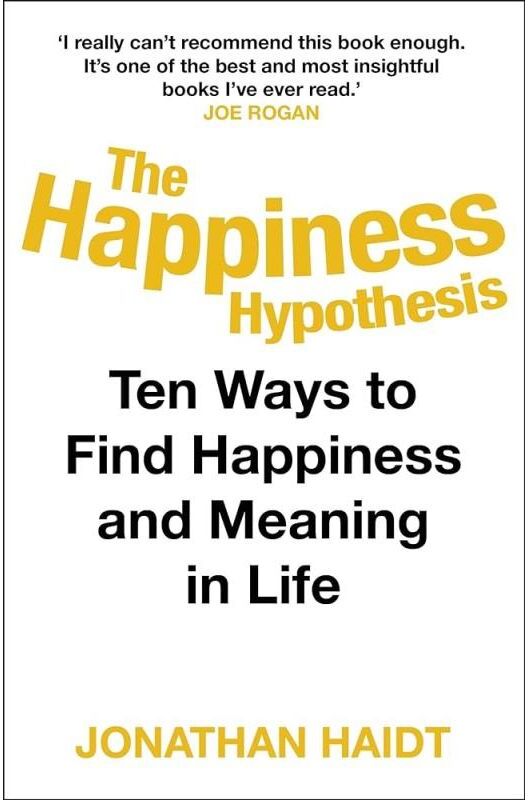
Cornerstone The Happiness Hypothesis: Ten Ways to Find Happiness and Meaning in LifeIn The Happiness Hypothesis, social psychologist Jonathan Haidt examines ten Great Ideas which have been championed across centuries and civilisations and asks: how can we apply these ideas to our twenty-first century lives?By holding ancient wisdom to the test of modern psychology, Haidt extracts lessons on how we can train our brains to be more optimistic, build better relationships and achieve a sense of balance. He also explores how we can overcome the obstacles to well-being that we place in our own way.In this uplifting and empowering book, Haidt draws on sources as diverse as Buddha, Benjamin Franklin and Shakespeare to show how we can find happiness and meaning in life10,99 £*Shipping: 2,99 £Secure redirect to the provider
-
The Love Hypothesis by Ali Hazelwood 3 Books Collection Set - Fiction - Paperback HachetteExperience the exhilarating journey of love, passion, and self-discovery with these captivating novels by Ali Hazelwood. Brace yourself for a whirlwind of emotions as you delve into the enchanting world of The Love Hypothesis, Love on the Brain, and Loathe to Love You. With vibrant characters, sizzling chemistry, and heartfelt narratives, these books are destined to sweep you off your feet and leave you yearning for more. Buy all three books in the sensational series, available now at Books2Door! In The Love Hypothesis, prepare to be completely smitten by Olive Smith, a brilliant and fiercely independent PhD student who finds herself entangled in an unexpected experiment called love. Determined to prove her scientific theory on the connection between attraction and compatibility, Olive strikes a deal with Adam Carlsen, her charming and infuriatingly attractive professor. As they embark on a fake dating escapade, their pretend romance begins to blur the lines between what's real and what's merely a hypothesis. Will Olive's heart succumb to the unexpected chemistry between them, or will her rational mind prevail? Ali Hazelwood weaves a tale of witty banter, undeniable attraction, and the power of love that will leave you breathless. Ali Hazelwood’s Love on the Brain, Dr. Bee Königswasser, a talented and driven neuroscientist, finds herself facing her greatest challenge yet—love. Determined to focus solely on her career, she has diligently avoided any romantic entanglements. However, when she embarks on a career-high assignment of co-leading a project at NASA, she has to contend with working alongside her old grad school nemesis, Levi Ward. And the thing is, she can't help but feel a magnetic pull towards him. With his irresistible charm and a shared passion for science, Levi becomes both Bee’s biggest distraction and her greatest temptation. As they navigate the complexities of their past and the uncertainties of the present, they discover that love is as captivating and elusive as the intricacies of the human brain. Ali Hazelwood expertly combines humour, heartache, and scientific curiosity in this breathtaking tale of second chances and the power of following your heart. Loathe to Love You is Ali Hazelwood’s STEMinist novella featuring a trio of engineers and their loves in loathing- now included with a special bonus chapter! The first story, Under One Roof, tells the story of an environmental engineer who discovers why scientists should never cohabitate after being stuck in the room with her lab enemy. Stuck With You follows the rivalry between a civil engineer and her rival nemesis who run through their enemies-to-lovers course after getting trapped in a New York elevator. Below Zero is a heart-warming romance story that follows a NASA aerospace engineer whose frozen and determined heart melts as she lies stranded in the remote Arctic research station with the only person willing to aid in her rescue being her long-time rival. Ali Hazelwood's...22,99 £*Shipping: 2,99 £Secure redirect to the provider
-
Sphere Ali Hazelwood 3 Book Collection Set - Love Theoretically, The Love Hypothesis, Love on the Brain - Paperback STEM Romance - NewThis Ali Hazelwood 3 Book Collection brings together three of the biggest STEM-romance sensations of the decade in one brand-new paperback set. Love, Theoretically, The Love Hypothesis, and Love on the Brain each pair whip-smart heroines working in science with slow-burn, laugh-out-loud romance. Perfect for book club readers and fans of adult romance, this bundle showcases Hazelwood's signature blend of academic authenticity, banter-heavy chemistry, and heartfelt emotional payoff across three complete, addictive bestselling novels. Love, Theoretically follows Elsie Hannaway, a theoretical physicist moonlighting as a professional fake girlfriend. When her separate worlds collide, Elsie must decide who she really is beneath the roles she plays. The Love Hypothesis is a romance about a woman who makes a pact with a man to test her hypothesis about attraction. Love on the Brain is a story about a woman who falls for her professor, but struggles to reconcile her feelings with her desire to maintain her independence. This collection is published by Sphere and is suitable for readers aged 16 and above.21,99 £*Shipping: 2,99 £Secure redirect to the provider
-
Sphere Ali Hazelwood Collection 4 Books Set (Love, Theoretically, The Love Hypothesis, Love on the Brain, Loathe to Love You)Love, Theoretically The many lives of theoretical physicist Elsie Hannaway have finally caught up with her. By day, she's an adjunct professor, toiling away at grading labs and teaching thermodynamics in the hopes of landing tenure. By other day, Elsie makes up for her non-existent paycheck by offering her services as a fake girlfriend, tapping into her expertly honed people-pleasing skills to embody whichever version of herself the client needs. The Love Hypothesis As a third-year Ph.D. candidate, Olive Smith doesn't believe in lasting romantic relationships but her best friend does, and that's what got her into this situation. Convincing Anh that Olive is on her way to a happily ever after was always going to be tough, scientists require proof. So, like any self-respecting woman, Olive panics and kisses the first man she sees. Love on the Brain Like an avenging, purple-haired Jedi bringing balance to the mansplained universe, Bee Königswasser lives by a simple code: What would Marie Curie do? If NASA offered her the lead on a neuroengineering project -- a literal dream come true after years scraping by on the crumbs of academia -- Marie would accept without hesitation. Duh. But the mother of modern physics never had to co-lead with Levi Ward. Loathe to Love You Three irresistible short stories by the global phenomenon Ali Hazelwood, now available together in paperback for the first time, with an exclusive bonus chapter. Mara, Sadie, and Hannah are friends first, scientists always. Though their fields of study might take them to different corners of the world, they can all agree on this universal truth: when it comes to love and science, opposites attract, and rivals make you burn....16,99 £*Shipping: 2,99 £Secure redirect to the provider
-
What is a hypothesis testing question?
A hypothesis testing question is a specific question that is formulated to test a hypothesis or a claim about a population parameter. It typically involves comparing two or more groups or conditions to determine if there is a significant difference between them. The question should clearly state the null hypothesis (H0) and the alternative hypothesis (Ha) and specify the variables being studied. The goal of hypothesis testing is to make an inference about the population based on sample data. **
-
What are possible questions about hypothesis testing?
Possible questions about hypothesis testing could include: 1. What is the purpose of hypothesis testing in statistics? 2. How do you determine the null and alternative hypotheses? 3. What are Type I and Type II errors, and how do they relate to hypothesis testing? 4. What are the steps involved in conducting a hypothesis test? 5. How do you interpret the results of a hypothesis test, including p-values and confidence intervals? **
-
What is the second question in hypothesis testing?
The second question in hypothesis testing is: What is the appropriate statistical test to use in order to evaluate the hypothesis? This involves selecting the correct statistical test based on the type of data and the specific hypothesis being tested. The choice of statistical test will depend on factors such as the nature of the data (e.g., continuous or categorical) and the research question being addressed. Selecting the appropriate statistical test is crucial in order to ensure accurate and reliable results in hypothesis testing. **
-
How can one switch hypotheses during hypothesis testing?
One can switch hypotheses during hypothesis testing by first formulating a null hypothesis and an alternative hypothesis based on the research question. If the initial hypothesis is not supported by the data, one can switch to the alternative hypothesis and continue the testing process. This can be done by re-evaluating the data, conducting additional analysis, or considering different variables. It is important to make sure that the decision to switch hypotheses is based on the evidence and not influenced by personal biases. **
Similar search terms for Hypothesis
-
Inspire Essentials Pet Glucose Monitoring Kit For Dogs And Cats With Easy No Coding Testing bTake a more active role in your pet's health with this pet glucose monitor designed for convenient at home blood sugar testing. Created specifically for dogs and cats, this easy to use monitoring kit helps pet owners track glucose levels quickly and...89,98 $*Shipping: 0,00 $Secure redirect to the provider
-
Modulus: Factory Automation PC Steam CD KeyModulus: Factory Automation – PC Buy Cheap Modulus: Factory Automation PC Game Overview Modulus: Factory Automation is a deep, systems‑driven automation and production simulator where you design, build, and optimize fully automated factories. Extract resources, research new technologies, create efficient production chains, and scale your industrial empire from a small workshop to a massive automated complex. With modular building, conveyor systems, logistics planning, and advanced automation tools, Modulus offers a satisfying blend of engineering, strategy, and creative problem‑solving — perfect for fans of factory‑building and optimization games. This PC version includes global activation and instant digital delivery. Key Features Modular Factory Building Design production lines using modular components, machines, and conveyor systems. Deep Automation Systems Automate everything from resource extraction to high‑tier manufacturing. Research & Technology Tree Unlock new machines, upgrades, and advanced automation tools. Resource Management Balance inputs, outputs, power usage, and logistics to keep production flowing. Scalable Complexity Start small and expand into a massive, fully automated industrial network. Optimization Gameplay Refine layouts, reduce bottlenecks, and maximize efficiency. PC Enhanced Smooth performance, clean UI, and full Steam integration. Who This Game Is For Perfect for players who: Enjoy factory‑building and automation games Like optimization, logistics, and production‑chain design Want a deep, scalable simulation experience Appreciate modular building systems Enjoy games like Factorio, Satisfactory, or Dyson Sphere Program Platform Details Platform: PC Region: Global Edition: Digital Activation Code Genre: Automation, Simulation, Strategy, Management How to Activate (PC) Log in to your Steam account. Click Add a Game → Activate a Product on Steam . Enter your Modulus: Factory Automation PC code. Download and start playing instantly.31,55 £*Shipping: 0,00 £Secure redirect to the provider
-
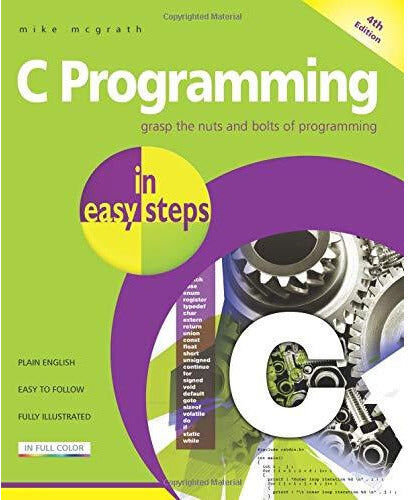
In Easy Steps Limited C Programming In Easy Steps 4th EditionC Programming in easy steps has an easy-to-follow style that will appeal to anyone who wants to begin programming in C, from programmers moving from another programming language, to the student who is studying C programming at school or college, or to those seeking a career in computing who need a fundamental understanding of procedural programming. C Programming in easy steps begins by explaining how to download and install a free C compiler so that you can quickly begin to create your own executable programs by copying the book's examples. You need have no previous knowledge of any programming language so it's ideal for the newcomer to computer programming. Each chapter builds your knowledge of C. C Programming in easy steps contains separate chapters on the major features of the C language. There are complete example programs that demonstrate each aspect of C together with screenshots that illustrate the output when that program has been executed. The sample code provided all has colored syntax-highlighting for clearer understanding. By the end of this book you will have gained a sound understanding of the C language and be able to write your own C programs and compile them into executable files that can be run on any compatible computer. Fully updated and revised since the third edition, which was published in April 2009.5,49 £*Shipping: 2,99 £Secure redirect to the provider
-
Learning Resources Switcheroo Coding CrewJoin the Switcheroo Coding Crew for challenge-solving, obstacle-evading, screen-free rescue missions! Preschoolers save the day the coding way with this three-in-one rescue robot who's ready for early STEM fun! Snap on a vehicle shell to transform...59,99 $*Shipping: 0,00 $Secure redirect to the provider
-
How can understanding of hypothesis testing be improved?
Understanding of hypothesis testing can be improved by practicing with real-world examples and data sets. By applying the concepts to actual scenarios, individuals can gain a better understanding of how hypothesis testing works and its practical implications. Additionally, seeking out additional resources such as textbooks, online tutorials, and workshops can provide different perspectives and explanations that can aid in comprehension. Finally, discussing and collaborating with peers or mentors can help clarify any confusion and deepen understanding of hypothesis testing. **
-
What is a hypothesis testing task in the Abitur exam?
In the Abitur exam, a hypothesis testing task typically involves formulating a research question and then using statistical methods to test a specific hypothesis related to the question. Students are often required to identify the null and alternative hypotheses, choose an appropriate statistical test, calculate the test statistic, and make a decision about whether to reject or fail to reject the null hypothesis based on the calculated p-value. This task assesses students' understanding of hypothesis testing and their ability to apply statistical methods to real-world scenarios. **
-
'In a hypothesis of association, which hypothesis test is used?'
In a hypothesis of association, the chi-square test is commonly used to determine if there is a significant association between two categorical variables. This test compares the observed frequencies of the data with the expected frequencies under the null hypothesis of no association. If the chi-square test results in a p-value that is less than the chosen significance level, then we reject the null hypothesis and conclude that there is a significant association between the two variables. **
-
What are type I and type II errors in hypothesis testing in mathematics?
In hypothesis testing in mathematics, a type I error occurs when a true null hypothesis is rejected. This means that the test incorrectly concludes that there is a significant effect or difference when there is not. On the other hand, a type II error occurs when a false null hypothesis is not rejected. This means that the test fails to detect a significant effect or difference when there actually is one. Both type I and type II errors are important considerations in hypothesis testing as they impact the accuracy and reliability of the conclusions drawn from the test. **
* All prices are inclusive of VAT and, if applicable, plus shipping costs. The offer information is based on the details provided by the respective shop and is updated through automated processes. Real-time updates do not occur, so deviations can occur in individual cases. ** Note: Parts of this content were created by AI.