Buy software24.eu ?
We are moving the project
software24.eu .
Are you interested in purchasing the domain
software24.eu ?
domain@kv-gmbh.de · 0541-91531010
Buy software24.eu ?
Why are demonstrative pronouns called demonstrative pronouns?
Demonstrative pronouns are called demonstrative because they demonstrate or point to a specific noun or pronoun in a sentence. They help to indicate the position or location of the noun or pronoun in relation to the speaker or listener. By using demonstrative pronouns such as "this," "that," "these," and "those," speakers can make their communication more precise and clear by specifying which person, place, thing, or idea they are referring to. **
What is the difference between demonstrative pronouns and demonstrative determiners in French?
In French, demonstrative pronouns (ce, cette, ces) stand alone to replace a noun, while demonstrative determiners (ce/cet, cette, ces) are used with a noun to indicate which specific thing or person is being referred to. For example, "Ce livre est intéressant" uses the demonstrative determiner "ce" with the noun "livre," while "Celui-ci est intéressant" uses the demonstrative pronoun "celui-ci" to replace the noun "livre." Demonstrative determiners are used before a noun, while demonstrative pronouns are used in place of a noun. **


Similar search terms for Demonstrative
Top-Angebote
Products related to Demonstrative:
-
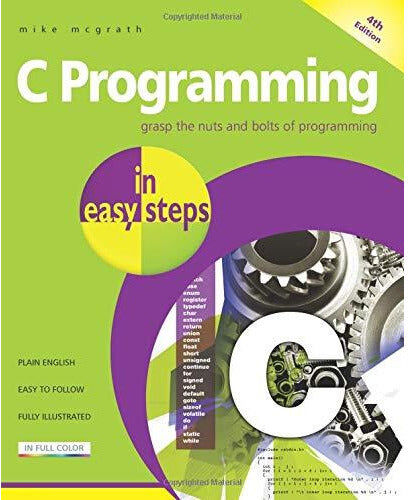
In Easy Steps Limited C Programming In Easy Steps 4th EditionC Programming in easy steps has an easy-to-follow style that will appeal to anyone who wants to begin programming in C, from programmers moving from another programming language, to the student who is studying C programming at school or college, or to those seeking a career in computing who need a fundamental understanding of procedural programming. C Programming in easy steps begins by explaining how to download and install a free C compiler so that you can quickly begin to create your own executable programs by copying the book's examples. You need have no previous knowledge of any programming language so it's ideal for the newcomer to computer programming. Each chapter builds your knowledge of C. C Programming in easy steps contains separate chapters on the major features of the C language. There are complete example programs that demonstrate each aspect of C together with screenshots that illustrate the output when that program has been executed. The sample code provided all has colored syntax-highlighting for clearer understanding. By the end of this book you will have gained a sound understanding of the C language and be able to write your own C programs and compile them into executable files that can be run on any compatible computer. Fully updated and revised since the third edition, which was published in April 2009.5,49 £*Shipping: 2,99 £Secure redirect to the provider
-
Learning Resources Switcheroo Coding CrewJoin the Switcheroo Coding Crew for challenge-solving, obstacle-evading, screen-free rescue missions! Preschoolers save the day the coding way with this three-in-one rescue robot who's ready for early STEM fun! Snap on a vehicle shell to transform...59,99 $*Shipping: 0,00 $Secure redirect to the provider
-
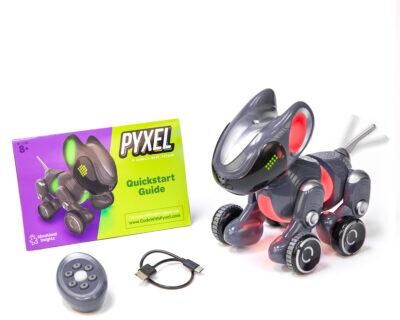
Learning Resources Pyxel The Coding PetKids use a computer or tablet to program this four-legged friend, then send their commands to the included remote to make the pet move, “talk”, and change facial expressions. Includes Coding Pet, user interface, and remote-activator unit. Pyxel The...124,99 $*Shipping: 0,00 $Secure redirect to the provider
-
CentreSoft PlayStation 5 Adventure Software (Disc)This PlayStation 5 software falls within the adventure and arcade action-adventure category. As a small family-run business, we use AI to assist us in providing detailed product information. If you have any questions or concerns, please don't hesitate to contact us for clarification. CentreSoft is the brand behind this product.27,79 £*Shipping: 3,95 £Secure redirect to the provider


-
What are demonstrative pronouns and relative pronouns?
Demonstrative pronouns are pronouns that are used to point to specific things or people. Examples of demonstrative pronouns include "this," "that," "these," and "those." Relative pronouns are pronouns that introduce dependent clauses and connect them to independent clauses. Examples of relative pronouns include "who," "whom," "whose," "which," and "that." **
-
Does French have the demonstrative determiner "cettes"?
No, French does not have the demonstrative determiner "cettes." The correct forms of the demonstrative determiner in French are "cette" for singular feminine nouns, "ce" for singular masculine nouns, and "ces" for plural nouns regardless of gender. "Cettes" is not a standard form in the French language. **
-
How do I use demonstrative pronouns correctly?
Demonstrative pronouns, such as "this," "that," "these," and "those," are used to point out specific people, places, or things. Use "this" and "these" to refer to something that is nearby or close in time, and use "that" and "those" to refer to something that is farther away or in the past. For example, you can say "This is my book" when referring to a book that is nearby, and "That was a great movie" when referring to a movie that you saw in the past. Make sure to match the demonstrative pronoun with the singular or plural noun it is replacing, and use the appropriate form (this/that or these/those) based on the distance or time. **
-
What is the demonstrative pronoun in French?
The demonstrative pronouns in French are "ce," "cette," "ces," and "cet" for singular and plural forms. These pronouns are used to point out or demonstrate specific people, places, or things. They agree in gender and number with the noun they refer to, and their usage depends on the proximity of the object being referred to. **


How does demonstrative silence manifest itself in lovers?
Demonstrative silence in lovers can manifest itself in various ways. It may occur during moments of deep emotional connection, where words are not needed to express their feelings for each other. It can also be a form of understanding and support, where one partner chooses to remain silent to give the other space to process their thoughts or emotions. In some cases, demonstrative silence can be a way for lovers to communicate without words, using nonverbal cues and gestures to convey their love and affection. **
Is it a demonstrative or personal pronoun in Latin?
In Latin, "hic" is a demonstrative pronoun. Demonstrative pronouns in Latin are used to point out specific things or people, while personal pronouns are used to refer to individuals or groups. "Hic" specifically means "this" or "these" and is used to indicate something close to the speaker. **
Top-Angebote
Products related to Demonstrative:
-
Inspire Essentials Pet Glucose Monitoring Kit For Dogs And Cats With Easy No Coding Testing bTake a more active role in your pet's health with this pet glucose monitor designed for convenient at home blood sugar testing. Created specifically for dogs and cats, this easy to use monitoring kit helps pet owners track glucose levels quickly and...89,98 $*Shipping: 0,00 $Secure redirect to the provider
-
Modulus: Factory Automation PC Steam CD KeyModulus: Factory Automation – PC Buy Cheap Modulus: Factory Automation PC Game Overview Modulus: Factory Automation is a deep, systems‑driven automation and production simulator where you design, build, and optimize fully automated factories. Extract resources, research new technologies, create efficient production chains, and scale your industrial empire from a small workshop to a massive automated complex. With modular building, conveyor systems, logistics planning, and advanced automation tools, Modulus offers a satisfying blend of engineering, strategy, and creative problem‑solving — perfect for fans of factory‑building and optimization games. This PC version includes global activation and instant digital delivery. Key Features Modular Factory Building Design production lines using modular components, machines, and conveyor systems. Deep Automation Systems Automate everything from resource extraction to high‑tier manufacturing. Research & Technology Tree Unlock new machines, upgrades, and advanced automation tools. Resource Management Balance inputs, outputs, power usage, and logistics to keep production flowing. Scalable Complexity Start small and expand into a massive, fully automated industrial network. Optimization Gameplay Refine layouts, reduce bottlenecks, and maximize efficiency. PC Enhanced Smooth performance, clean UI, and full Steam integration. Who This Game Is For Perfect for players who: Enjoy factory‑building and automation games Like optimization, logistics, and production‑chain design Want a deep, scalable simulation experience Appreciate modular building systems Enjoy games like Factorio, Satisfactory, or Dyson Sphere Program Platform Details Platform: PC Region: Global Edition: Digital Activation Code Genre: Automation, Simulation, Strategy, Management How to Activate (PC) Log in to your Steam account. Click Add a Game → Activate a Product on Steam . Enter your Modulus: Factory Automation PC code. Download and start playing instantly.31,55 £*Shipping: 0,00 £Secure redirect to the provider
-
In Easy Steps Limited C Programming In Easy Steps 4th EditionC Programming in easy steps has an easy-to-follow style that will appeal to anyone who wants to begin programming in C, from programmers moving from another programming language, to the student who is studying C programming at school or college, or to those seeking a career in computing who need a fundamental understanding of procedural programming. C Programming in easy steps begins by explaining how to download and install a free C compiler so that you can quickly begin to create your own executable programs by copying the book's examples. You need have no previous knowledge of any programming language so it's ideal for the newcomer to computer programming. Each chapter builds your knowledge of C. C Programming in easy steps contains separate chapters on the major features of the C language. There are complete example programs that demonstrate each aspect of C together with screenshots that illustrate the output when that program has been executed. The sample code provided all has colored syntax-highlighting for clearer understanding. By the end of this book you will have gained a sound understanding of the C language and be able to write your own C programs and compile them into executable files that can be run on any compatible computer. Fully updated and revised since the third edition, which was published in April 2009.5,49 £*Shipping: 2,99 £Secure redirect to the provider
-
Learning Resources Switcheroo Coding CrewJoin the Switcheroo Coding Crew for challenge-solving, obstacle-evading, screen-free rescue missions! Preschoolers save the day the coding way with this three-in-one rescue robot who's ready for early STEM fun! Snap on a vehicle shell to transform...59,99 $*Shipping: 0,00 $Secure redirect to the provider
-
Why are demonstrative pronouns called demonstrative pronouns?
Demonstrative pronouns are called demonstrative because they demonstrate or point to a specific noun or pronoun in a sentence. They help to indicate the position or location of the noun or pronoun in relation to the speaker or listener. By using demonstrative pronouns such as "this," "that," "these," and "those," speakers can make their communication more precise and clear by specifying which person, place, thing, or idea they are referring to. **
-
What is the difference between demonstrative pronouns and demonstrative determiners in French?
In French, demonstrative pronouns (ce, cette, ces) stand alone to replace a noun, while demonstrative determiners (ce/cet, cette, ces) are used with a noun to indicate which specific thing or person is being referred to. For example, "Ce livre est intéressant" uses the demonstrative determiner "ce" with the noun "livre," while "Celui-ci est intéressant" uses the demonstrative pronoun "celui-ci" to replace the noun "livre." Demonstrative determiners are used before a noun, while demonstrative pronouns are used in place of a noun. **
-
What are demonstrative pronouns and relative pronouns?
Demonstrative pronouns are pronouns that are used to point to specific things or people. Examples of demonstrative pronouns include "this," "that," "these," and "those." Relative pronouns are pronouns that introduce dependent clauses and connect them to independent clauses. Examples of relative pronouns include "who," "whom," "whose," "which," and "that." **
-
Does French have the demonstrative determiner "cettes"?
No, French does not have the demonstrative determiner "cettes." The correct forms of the demonstrative determiner in French are "cette" for singular feminine nouns, "ce" for singular masculine nouns, and "ces" for plural nouns regardless of gender. "Cettes" is not a standard form in the French language. **
Similar search terms for Demonstrative
-
Learning Resources Pyxel The Coding PetKids use a computer or tablet to program this four-legged friend, then send their commands to the included remote to make the pet move, “talk”, and change facial expressions. Includes Coding Pet, user interface, and remote-activator unit. Pyxel The...124,99 $*Shipping: 0,00 $Secure redirect to the provider
-
CentreSoft PlayStation 5 Adventure Software (Disc)This PlayStation 5 software falls within the adventure and arcade action-adventure category. As a small family-run business, we use AI to assist us in providing detailed product information. If you have any questions or concerns, please don't hesitate to contact us for clarification. CentreSoft is the brand behind this product.27,79 £*Shipping: 3,95 £Secure redirect to the provider
-
ACDSee Software Bundle Key Lifetime / 1 PCACDSee Creative Suite – LUXEA Pro Video Editor 7 & Gemstone Photo Editor 12 Unleash your full creative potential with the ACDSee Software Bundle , featuring LUXEA Pro Video Editor 7 and Gemstone Photo Editor 12 . This all-in-one package is designed for modern creators who demand professional-grade tools for both video production and advanced photo editing. What’s Included LUXEA Pro Video Editor 7 Timeline-based editing with drag-and-drop simplicity Motion tracking, keyframing, and cinematic transitions Screen recording and voiceover integration Full 4K output and social-ready export presets Gemstone Photo Editor 12 Layer-based editing with precision masking and blending RAW image support for over 600 camera models AI-powered selection and correction tools Multi-document tabbed interface for efficient multitasking This bundle is ideal for photographers, YouTubers, educators, and digital artists looking to streamline their workflow across photo and video projects.0,41 £*Shipping: 0,00 £Secure redirect to the provider
-
Bosch Smart Home Universal Switch Flex White Matt Slim Automation SwitchDescription Control your smart home devices with ease using the Bosch Smart Home Universal Switch Flex in White Matt. Designed for convenient automation and flexible placement, this slim wireless switch allows you to control connected Bosch Smart Home devices with a simple press. Featuring a modern raised slim profile and screwless design, the Universal Switch Flex blends seamlessly into any home interior. With wireless communication technology and low power consumption, it provides a reliable and practical solution for smart home control without the need for complex wiring. Ideal for lighting control, automation routines, and smart home scenarios, the Bosch Smart Home Universal Switch Flex offers a simple way to make everyday tasks more convenient.40,99 £*Shipping: 0,00 £Secure redirect to the provider
-
How do I use demonstrative pronouns correctly?
Demonstrative pronouns, such as "this," "that," "these," and "those," are used to point out specific people, places, or things. Use "this" and "these" to refer to something that is nearby or close in time, and use "that" and "those" to refer to something that is farther away or in the past. For example, you can say "This is my book" when referring to a book that is nearby, and "That was a great movie" when referring to a movie that you saw in the past. Make sure to match the demonstrative pronoun with the singular or plural noun it is replacing, and use the appropriate form (this/that or these/those) based on the distance or time. **
-
What is the demonstrative pronoun in French?
The demonstrative pronouns in French are "ce," "cette," "ces," and "cet" for singular and plural forms. These pronouns are used to point out or demonstrate specific people, places, or things. They agree in gender and number with the noun they refer to, and their usage depends on the proximity of the object being referred to. **
-
How does demonstrative silence manifest itself in lovers?
Demonstrative silence in lovers can manifest itself in various ways. It may occur during moments of deep emotional connection, where words are not needed to express their feelings for each other. It can also be a form of understanding and support, where one partner chooses to remain silent to give the other space to process their thoughts or emotions. In some cases, demonstrative silence can be a way for lovers to communicate without words, using nonverbal cues and gestures to convey their love and affection. **
-
Is it a demonstrative or personal pronoun in Latin?
In Latin, "hic" is a demonstrative pronoun. Demonstrative pronouns in Latin are used to point out specific things or people, while personal pronouns are used to refer to individuals or groups. "Hic" specifically means "this" or "these" and is used to indicate something close to the speaker. **
* All prices are inclusive of VAT and, if applicable, plus shipping costs. The offer information is based on the details provided by the respective shop and is updated through automated processes. Real-time updates do not occur, so deviations can occur in individual cases. ** Note: Parts of this content were created by AI.